Women's Rights Timeline: Key US Milestones From 1848 to Today
A women's rights timeline for the US, from Seneca Falls to the 2026 Title IX rules, with Arizona milestones marked. Rights came in waves, and now go both ways.

This women's rights timeline runs from a chapel in upstate New York in 1848 to a federal rule published last month. It's short on speeches and long on dates, because dates are where you can see the pattern: rights for women arrived in bursts, decades apart, and lately they've started moving backward too.
Why this women's rights timeline isn't a straight line
If you grew up thinking women's rights were a staircase that only goes up, this page is here to gently ruin that. Every entry below was won by people who organized for years, often for decades, and several were later narrowed, stalled or reversed. Our stance is simple: progress is real, it's never automatic, and the most recent entries prove it can be undone. Knowing the dates is how you spot the next turn before it happens.
Most of the women who signed the first public demand for the vote in 1848 didn't live to cast one. Lilly Ledbetter never got back the pay she lost, even after Congress named a law after her. That's the texture a list of dates can hide, so we've added the story behind the biggest entries.
How to read this list of women's rights by year
Think of this as a list of women's rights by year with the context put back in. We've grouped women's rights by year into four eras. Each era opens with a short note on what was happening, then a table of dated milestones, then the backstory worth knowing. Every entry links to its source, so you can check us (please do).
Arizona's own milestones are marked Arizona. That isn't hometown pride for its own sake. This state shows up early again and again, and occasionally it shows up late, and both versions are worth knowing if you live here.
For what each of these laws means for you today, see our plain-language guide to women's rights in the United States.

1848 to 1920: Where women's rights history starts, with the vote
Elizabeth Cady Stanton and Lucretia Mott called the meeting at Seneca Falls in July 1848, and more than 300 people came (National Park Service). The suffrage amendment was first introduced in Congress in 1878. It finally passed Congress on June 4, 1919 (National Archives). That's 72 years from the convention to ratification, with the West moving first.
| Date | Milestone |
|---|---|
| July 19 to 20, 1848 | The first women's rights convention meets at the Wesleyan Chapel in Seneca Falls, New York. One hundred people, 68 women and 32 men, sign the Declaration of Sentiments (National Park Service). |
| Dec. 10, 1869 | Wyoming Territory's governor, John A. Campbell, signs a bill giving women the right to vote (Ms. Magazine). |
| May 1872 | The Equal Rights Party nominates Victoria Woodhull for president, the first woman to run for the office, nearly 50 years before women could vote nationally (NPR Illinois). |
| Nov. 5, 1912 | Arizona: Arizona's male voters approve women's suffrage by more than two to one, the same year Arizona becomes a state (University of Arizona Libraries). |
| Nov. 7, 1916 | Jeannette Rankin of Montana is elected to the U.S. House, the first woman elected to Congress (National Archives). |
| Aug. 18, 1920 | Tennessee becomes the 36th state to ratify the 19th Amendment, which bars denying the vote "on account of sex." It is certified Aug. 26 (National Archives). |
Arizona votes early, by going around the legislature
Arizona's suffrage fight was long and stubborn. Bills were introduced and defeated in the territorial legislature through the 1880s. Josephine Brawley Hughes founded the territory's first women's suffrage organization in 1891, and in 1903 the legislature finally passed a suffrage bill, only for Gov. Alexander Brodie to veto it (National Park Service).
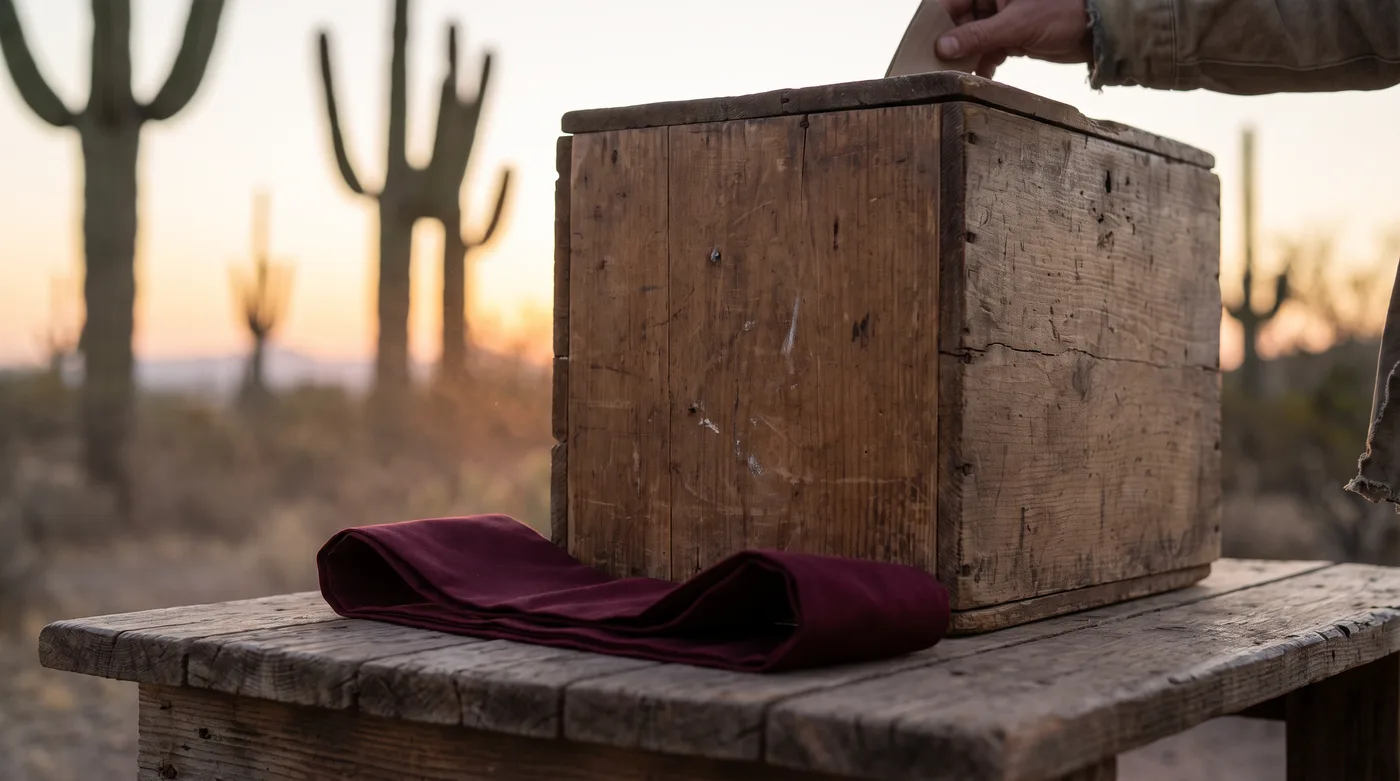
So in 1912, after the new state Senate defeated a suffrage resolution by a single vote, suffragists stopped asking lawmakers. Led by Frances Willard Munds, they used the brand-new initiative process to take the question straight to voters. They needed 3,342 signatures and turned in more than 4,000. On Nov. 5, 1912, about 68 percent of Arizona's male voters said yes, which the University of Arizona Libraries calls the largest margin of approval in the country (University of Arizona Libraries). The whole campaign cost less than $2,000.
Arizona became the tenth state where women won full voting rights, and on Feb. 12, 1920, it ratified the 19th Amendment (National Park Service).
But "women got the vote" has always come with an asterisk.
The 19th Amendment didn't open the polls to every woman. Black women were technically allowed to vote, but their voting rights weren't truly protected until the Voting Rights Act of 1965, and Native American, Asian American and Latina women faced their own barriers for decades longer (National Park Service).
1948 to 1978: Work, school and the body
After 1920, the movement went quieter for a generation. Then, in roughly 15 years, Congress and the courts rewrote the rules for women at work, at school, at the bank and in the doctor's office. Almost every workplace protection women rely on today dates from this stretch, which makes it the busiest chapter on the whole list.
| Date | Milestone |
|---|---|
| July 15, 1948 | Arizona: In Harrison v. Laveen, the Arizona Supreme Court rules that Native Americans, women included, cannot be barred from voting as "persons under guardianship" (National Park Service). |
| Feb. 19, 1963 | Betty Friedan publishes The Feminine Mystique (History.com). |
| June 10, 1963 | The Equal Pay Act requires equal pay for substantially equal work (EEOC). |
| July 2, 1964 | The Civil Rights Act is signed. Title VII bans sex discrimination in hiring, firing and pay (EEOC). |
| June 7, 1965 | Griswold v. Connecticut strikes down a state ban on contraception for married couples (Oyez). |
| Nov. 5, 1968 | Shirley Chisholm of New York is elected to the U.S. House, the first Black woman in Congress (U.S. House of Representatives). |
| March 22, 1972 | The Senate passes the Equal Rights Amendment 84 to 8, sending it to the states (U.S. Senate). |
| June 23, 1972 | Title IX bans sex discrimination in schools that receive federal money (U.S. Department of Justice). |
| Jan. 22, 1973 | Roe v. Wade recognizes a constitutional right to abortion (Roe v. Wade, 410 U.S. 113). |
| Oct. 28, 1974 | The Equal Credit Opportunity Act bans lenders from discriminating based on sex or marital status (U.S. Department of Justice). |
| Oct. 31, 1978 | The Pregnancy Discrimination Act makes pregnancy discrimination a form of sex discrimination (EEOC). |
Arizona's second suffrage fight
Native women in Arizona were left out of 1912 entirely. In 1928, in Porter v. Hall, two men from the Gila River Indian Community sued after Pinal County refused to register them, and they lost: the court relied on a state constitutional provision that treated Native people as "persons under guardianship" (National Park Service).
Twenty years later, Frank Harrison, a World War II veteran, and Harry Austin, chairman of the Yavapai Nation, were turned away when they tried to register. They sued and won in the Arizona Supreme Court, which overturned Porter v. Hall in 1948. Even then, literacy tests and other barriers kept many Native voters away from the polls.
The 1970s: the busiest decade for women's rights by year
Look at how many entries land between 1972 and 1978. Title IX, Roe, credit, pregnancy. Before the Equal Credit Opportunity Act, many banks wouldn't give a woman a credit card without a man's signature. That's within living memory. Ask your mom.
The ERA almost made it, too. Alice Paul wrote the amendment in 1922: "Equality of rights under the law shall not be denied or abridged by the United States or by any State on account of sex." After the Senate passed it 84 to 8 in 1972, the ratification deadline was extended once and then expired in 1982, with the amendment three states short (U.S. Senate). Arizona was still among the states that hadn't ratified it as of 2019 (PBS NewsHour, 2019).
1981 to 2009: Seats at the table
With the legal floor in place, the next era was about who got to sit where decisions are made: the Supreme Court, the ballot, the Speaker's chair. An Arizonan went first on the Court, and Arizona became the first state with women in all five of its top elected offices.
| Date | Milestone |
|---|---|
| Sept. 25, 1981 | Arizona: Sandra Day O'Connor, a former Arizona state senator and appeals judge, is sworn in as the first woman on the U.S. Supreme Court (Reagan Library). |
| July 19, 1984 | Geraldine Ferraro accepts the Democratic nomination for vice president, the first woman on a major-party national ticket (Ms. Magazine). |
| Feb. 5, 1993 | The Family and Medical Leave Act guarantees eligible workers up to 12 weeks of unpaid, job-protected leave (U.S. Department of Labor). |
| Aug. 10, 1993 | Ruth Bader Ginsburg takes the oath as a Supreme Court justice (Federal Judicial Center). |
| Sept. 13, 1994 | The Violence Against Women Act funds the national response to domestic violence and sexual assault (Congressional Research Service). |
| January 1999 | Arizona: Arizona becomes the first state with women in its top five elected offices: Gov. Jane Hull, Secretary of State Betsey Bayless, Attorney General Janet Napolitano, Superintendent Lisa Graham Keegan and Treasurer Carol Springer. They are sworn in by Justice O'Connor (Stateline). |
| Jan. 4, 2007 | Nancy Pelosi becomes the first woman Speaker of the House (History.com). |
| Jan. 29, 2009 | The Lilly Ledbetter Fair Pay Act resets the deadline for pay discrimination complaints with each unequal paycheck (EEOC). |
Sandra Day O'Connor's Arizona road
Before she was Justice O'Connor, she was a working Arizona politician. She was appointed to the Arizona State Senate in 1969 and elected Senate majority leader in 1973. Then came the Maricopa County Superior Court in 1975 and the Arizona Court of Appeals in 1979, two years before the U.S. Senate confirmed her to the Supreme Court on Sept. 21, 1981 (FindLaw). She served until 2006 and died in Phoenix on Dec. 1, 2023 (Britannica).
Arizona's "Fab Five" didn't stay together forever; later elections changed the lineup. But for a while, a state that approved women's suffrage before it was a year old had women in every one of its top jobs. We profile more Arizona trailblazers in our Arizona Women's Hall of Fame spotlight.
The paycheck that took a law to fix
Lilly Ledbetter was one of the few women supervisors at a Goodyear plant in Gadsden, Alabama, and found out from an anonymous note that she was paid less than the men. In 2007, the Supreme Court ruled 5 to 4 that she'd filed too late. Justice Ruth Bader Ginsburg's dissent invited Congress to fix it, and in 2009 the Lilly Ledbetter Fair Pay Act was the first bill President Barack Obama signed (SCOTUSblog, 2026). Our guide to the gender pay gap picks up what the pay laws have and haven't fixed since.

2016 to today: Firsts and reversals
The most recent era runs on two tracks at once. Women broke some of the last top-level ceilings in politics. At the same time, courts and agencies rolled back or rewrote protections many people assumed were settled. If you want proof that rights aren't permanent, this is the section.
| Date | Milestone |
|---|---|
| July 26, 2016 | Hillary Clinton becomes the first woman nominated for president by a major party (WTTW News). |
| Jan. 20, 2021 | Kamala Harris is sworn in as the first woman, and first person of color, to serve as vice president (The Gazette). |
| June 24, 2022 | Dobbs v. Jackson Women's Health Organization overturns Roe v. Wade. Abortion law is now set state by state (Supreme Court). |
| June 27, 2023 | The Pregnant Workers Fairness Act takes effect, requiring reasonable accommodations for pregnancy-related limitations (EEOC). |
| Dec. 17, 2024 | The Archivist of the United States says the Equal Rights Amendment cannot be certified, citing the ratification deadline, even though 38 states have ratified it (National Archives). |
| Sept. 29, 2026 | The Education Department formally repeals the 2024 Title IX rule and largely restores the 2020 rules (Federal Register). |
The newest entry is barely three weeks old. On Sept. 29, 2026, the Education Department formally removed the 2024 Title IX rule and restored the framework it had been enforcing since early 2025, which mirrors the 2020 rule with four minor differences. It took effect immediately, without a public comment period (Holland and Knight, 2026). For where things stand now, see our roundup of women's rights issues today.
What women's rights history tells us
Read the whole thing top to bottom and a few patterns jump out.
Rights come in clusters. Nearly every major workplace and education protection here passed between 1963 and 1978. Long stretches before and after saw comparatively little, which tells you something about how rare those windows are and how much organizing it takes to open one.
Most of these rights are laws, not constitutional guarantees. The 19th Amendment is in the Constitution. The ERA still isn't certified. Almost everything else is a law Congress can amend, a regulation an agency can rewrite or a ruling a court can revisit. That's exactly what happened with Roe, and with Title IX three times in six years.
Arizona has often been early, and sometimes late. Women here voted eight years before the 19th Amendment. A former Arizona state senator became the first woman on the Supreme Court. Arizona was the first state to elect women to all five of its top offices. And Native women in Arizona waited until 1948 to be recognized as voters.
The people on this list were mostly not famous when they started. A territorial organizer. A WWII veteran turned away at the registrar's office. A tire plant supervisor with an anonymous note. Women's rights history is mostly ordinary people who refused to drop it.

What to do with this timeline
Use it. A women's rights timeline is only useful if it leaves the page, so share an entry on its anniversary. Hand it to a teenager doing a history project (they'll find the Arizona parts surprising). When someone says a right is settled, find it on this list and check whether it's a constitutional amendment, a law or a court ruling, because that tells you how easily it can change.
We'll keep adding to this page as laws and rulings change. The timeline isn't finished, and neither are we.
Questions people ask
What are the most important dates in the women's rights timeline?
Key US milestones include the Seneca Falls Convention (July 19 to 20, 1848), ratification of the 19th Amendment (Aug. 18, 1920), the Equal Pay Act (June 10, 1963), Title VII of the Civil Rights Act (July 2, 1964), Title IX (June 23, 1972), Roe v. Wade (Jan. 22, 1973) and Dobbs v. Jackson, which overturned Roe (June 24, 2022).
What is a short list of women's rights by year in the US?
1920: the 19th Amendment. 1963: the Equal Pay Act. 1964: Title VII. 1972: Title IX. 1974: the Equal Credit Opportunity Act. 1978: the Pregnancy Discrimination Act. 1993: the Family and Medical Leave Act. 1994: the Violence Against Women Act. 2009: the Lilly Ledbetter Fair Pay Act. 2023: the Pregnant Workers Fairness Act takes effect.
When does women's rights history in the US usually start?
Most histories start with the Seneca Falls Convention in July 1848, where Elizabeth Cady Stanton and Lucretia Mott gathered more than 300 people and 100 signed the Declaration of Sentiments. The suffrage amendment was first introduced in Congress 30 years later, in 1878.
Where does Arizona fall on the women's rights timeline?
Arizona's voters approved women's suffrage on Nov. 5, 1912, eight years before the 19th Amendment, and the state ratified the amendment on Feb. 12, 1920. Native Americans in Arizona were not recognized as eligible voters until a 1948 Arizona Supreme Court ruling.
In women's rights history, when could women get a credit card in their own name?
The Equal Credit Opportunity Act, signed Oct. 28, 1974, made it illegal for lenders to discriminate based on sex or marital status, so a woman could no longer be required to have a husband or father co-sign.
Is the Equal Rights Amendment on the women's rights timeline yet?
Not officially. Congress passed the ERA in 1972 and 38 states have ratified it, but on Dec. 17, 2024, the Archivist of the United States said it cannot be certified because the ratification deadline passed. Its legal status is unresolved.
References
- National Park Service. (n.d.). The first women's rights convention. https://www.nps.gov/wori/learn/historyculture/the-first-womens-rights-convention.htm
- National Park Service. (2019). Arizona and the 19th Amendment. https://home.nps.gov/articles/arizona-and-the-19th-amendment.htm
- Ms. Magazine. (2020). Today in feminist history: Wyoming Territory enfranchises women. https://msmagazine.com/2020/12/10/today-in-feminist-history-wyoming-territory-enfranchises-women-december-10-1869
- NPR Illinois. (2022). 150 years ago, Victoria Woodhull became the first woman to run for president. https://www.nprillinois.org/2022-11-07/150-years-ago-victoria-woodhull-became-the-first-woman-to-run-for-president
- University of Arizona Libraries. (n.d.). Founding mothers: Arizona votes for women. https://exhibits.lib.arizona.edu/exhibits/show/foundingmothers/azvote
- National Archives. (n.d.). First congresswoman Jeannette Rankin. https://visit.archives.gov/whats-on/explore-exhibits/first-congresswoman-jeannette-rankin
- National Archives. (n.d.). 19th Amendment to the U.S. Constitution: Women's right to vote. https://www.archives.gov/milestone-documents/19th-amendment
- National Park Service. (n.d.). Fighting for voting rights at Grand Canyon and across Arizona. https://home.nps.gov/articles/000/fighting-for-voting-rights-at-grand-canyon-and-across-arizona.htm
- History.com. (n.d.). The Feminine Mystique is published. https://history.com/this-day-in-history/February-19/the-feminine-mystique-by-betty-friedan-is-published
- U.S. Equal Employment Opportunity Commission. (n.d.). Equal Pay Act of 1963. https://www.eeoc.gov/statutes/equal-pay-act-1963
- U.S. Equal Employment Opportunity Commission. (n.d.). Title VII of the Civil Rights Act of 1964. https://www.eeoc.gov/statutes/title-vii-civil-rights-act-1964
- Oyez. (n.d.). Griswold v. Connecticut. https://www.oyez.org/cases/1964/496
- U.S. House of Representatives. (n.d.). Shirley Chisholm. History, Art and Archives. https://history.house.gov/HistoricalHighlight/Detail/37113?ret=True
- U.S. Senate. (n.d.). Senate passes ERA. https://www.senate.gov/artandhistory/history/minute/Senate_passes_ERA.htm
- PBS NewsHour. (2019). One of these states could ratify the Equal Rights Amendment. https://www.pbs.org/newshour/politics/one-of-these-states-could-ratify-the-equal-rights-amendment
- U.S. Department of Justice. (n.d.). Title IX. https://www.justice.gov/crt/title-ix
- Roe v. Wade, 410 U.S. 113 (1973). https://en.wikisource.org/wiki/410_U.S._113
- U.S. Department of Justice. (n.d.). Equal Credit Opportunity Act. https://www.justice.gov/crt/equal-credit-opportunity-act-3
- U.S. Equal Employment Opportunity Commission. (n.d.). Pregnancy Discrimination Act of 1978. https://www.eeoc.gov/statutes/pregnancy-discrimination-act-1978
- Ronald Reagan Presidential Library. (n.d.). Sandra Day O'Connor. https://reagan.artifacts.archives.gov/people/31285/sandra-day-oconnor
- FindLaw. (n.d.). Sandra Day O'Connor. https://supreme.findlaw.com/supreme_court/justices/pastjustices/oconnor.html
- Britannica. (n.d.). Sandra Day O'Connor. https://www.britannica.com/biography/Sandra-Day-OConnor
- Ms. Magazine. (2014). It was 30 years ago today that Geraldine Ferraro was nominated for U.S. VP. https://msmagazine.com/2014/07/19/it-was-30-years-ago-today-that-geraldine-ferraro-was-nominated-for-u-s-vp/
- U.S. Department of Labor. (n.d.). Family and Medical Leave Act. https://www.dol.gov/agencies/whd/fmla
- Federal Judicial Center. (n.d.). Ginsburg, Ruth Bader. https://www.fjc.gov/history/judges/ginsburg-ruth-bader
- Congressional Research Service. (n.d.). The Violence Against Women Act (VAWA). https://www.congress.gov/crs-product/R46742
- Stateline. (1999). 'Fab Five' give Arizona something to brag about. https://stateline.org/1999/02/03/fab-five-give-arizona-something-to-brag-about/
- History.com. (n.d.). Nancy Pelosi becomes first female Speaker of the House. https://www.history.com/this-day-in-history/january-4/nancy-pelosi-named-speaker-of-the-house-2004
- U.S. Equal Employment Opportunity Commission. (n.d.). Lilly Ledbetter Fair Pay Act of 2009. https://www.eeoc.gov/statutes/lilly-ledbetter-fair-pay-act-2009
- SCOTUSblog. (2026). The dissent that became a statute. https://www.scotusblog.com/2026/06/the-dissent-that-became-a-statute/
- WTTW News. (2016). Hillary Clinton secures historic Democratic nomination for president. https://news.wttw.com/2016/07/26/hillary-clinton-secures-historic-democratic-nomination-president
- The Gazette. (2021). Kamala Harris sworn in as America's first female vice president. https://gazette.com/2021/01/20/kamala-harris-sworn-in-as-americas-first-female-vice-president/
- Supreme Court of the United States. (2022). Dobbs v. Jackson Women's Health Organization. https://www.supremecourt.gov/opinions/21pdf/19-1392_6j37.pdf
- U.S. Equal Employment Opportunity Commission. (n.d.). What you should know about the Pregnant Workers Fairness Act. https://www.eeoc.gov/wysk/what-you-should-know-about-pregnant-workers-fairness-act
- National Archives. (2024). National Archives statement on the Equal Rights Amendment. https://www.archives.gov/press/press-releases/2025/nr25-004
- Federal Register. (2026). Recodification of Title IX rules. https://public-inspection.federalregister.gov/2026-19929.pdf
- Holland and Knight. (2026). Education Department formally repeals 2024 Title IX rule. https://www.hklaw.com/en/insights/publications/2026/09/education-department-formally-repeals-2024-title-ix-rule